Comprehensive Eye & Vision Exams


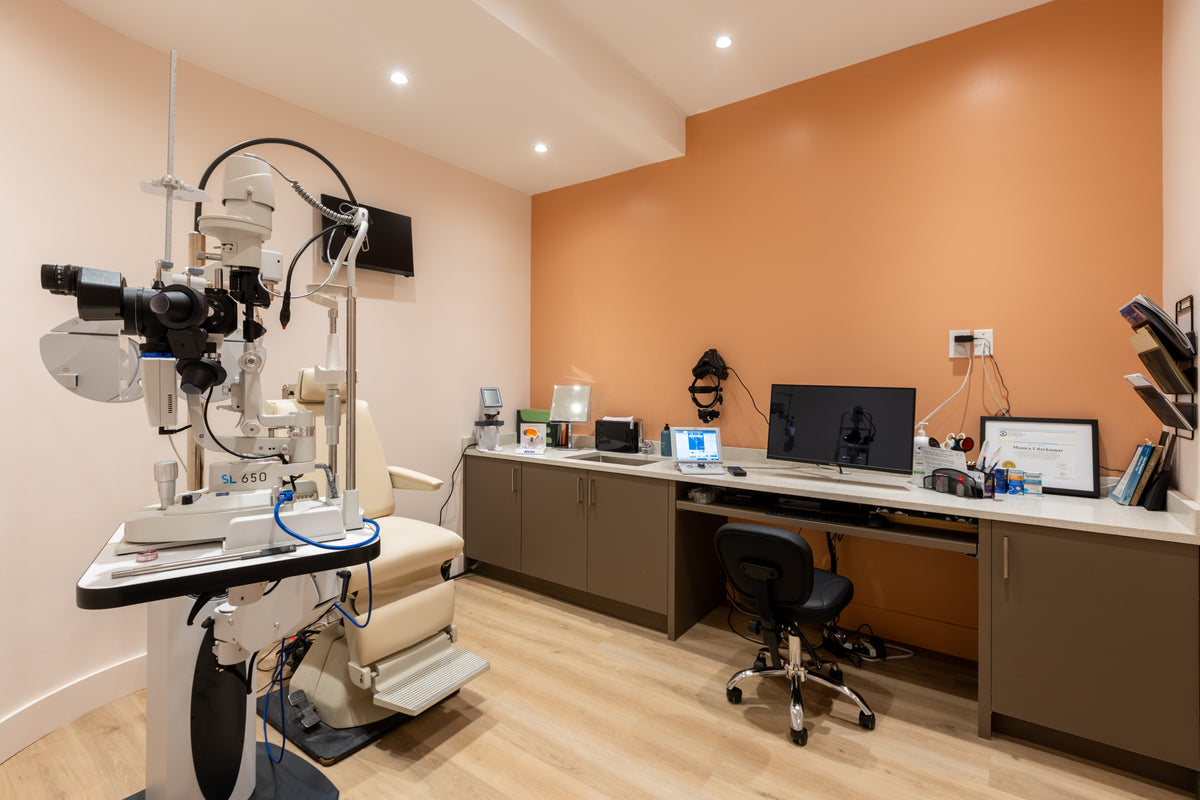
Our comprehensive eye exams include advanced technologies such as OCT (Optical Coherence Tomography), Corneal Topography and Fundus Photography. These lead to early detection of eye diseases such as Macular Degeneration, Glaucoma, and Keratoconus. 

Regular eye exams are recommended once every two years unless you have any systemic conditions including but not exclusive to: Diabetes, High Blood Pressure or High Cholesterol. 

Our Eye Exams start at $165  

*Contact lens wearers: Please book a contact lens eye exam. This includes the comprehensive eye exam plus contact lens fitting. This is required to order contact lenses. 

Dry Eye

Intense Pulsed Light (IPL) therapy is an advanced, non-invasive treatment designed to address the root causes of chronic dry eye disease and Meibomian Gland Dysfunction (MGD). Rather than just masking symptoms with temporary drops, IPL uses gentle pulses of light to reduce inflammation, improve blood vessel structure, and restore healthy tear function.

How It Works

  • Reduces Inflammation: Light energy targets abnormal, leaky blood vessels around the eyes that contribute to chronic inflammation.
  • Unclogs Oil Glands: The thermal energy warms and liquefies hardened oils trapped inside the meibomian glands, allowing natural oils to flow freely.
  • Combats Bacteria & Mites: Helps decrease the burden of bacteria and subsequently Demodex mites along the eyelids.

What to Expect During Treatment

  • Quick & Comfortable: A standard session takes approximately 15–20 minutes.
  • Safe Procedure: Protective eyewear is placed over your eyes, and a cool gel is applied to the treatment area before warm pulses of light are applied across the upper cheeks and tear-film zone.
  • Minimal Downtime: You can return to your normal daily activities right after your appointment. Most patients benefit from a series of 3 to 4 treatments spaced a few weeks apart.
50.0% 50.0%

Children’s Eye Exam

At Lunaris, we accept children of all ages. With a rotation done at the Pediatric department at Salus University, Dr. Monica is well versed with the special techniques used in children’s eye exams.  

Children are recommended to undergo their first eye exam at 6 months of age to ensure proper vision development and their second eye examination between the ages of 2-3, and subsequently every year thereafter. 

Please contact us to book your children especially if you notice any of the following: 

  • Squinting or frowns when looking far or near
  • Rubs their eye(s) a lot  
  • Does not make eye contact 
  • Closes or covers when eye 
  • Holds books very close to their face 
  • Blinks more than usual 
  • Turns or tilts head when viewing objects 
  • Trips, falls or bumps into things often. 
50.0% 50.0%

Myopia Control

Myopia is rising at unprecedented rates worldwide, with roughly half the world projected to be myopic by the 2050. This matters beyond thicker glasses; higher risk of diseases such as glaucoma, retinal tears and detachment, and myopic maculopathy. 

An increase of greater than -0.50 over a year is a signal to watch closely and consecutive years of myopic progression warrants active treatment. We recommend these children to be monitored every 6 months as opposed to yearly.

Treatment options include: Atropine eye drops, special soft contact lenses, myopia control glasses and orthokeratology (Ortho-K). We'll walk you through which options we offer in-house and which we co-manage   

At Lunaris Vision, our myopia control package includes an initial cycloplegic (dilated) consultation and three follow-ups at the three-, six- and nine-month mark. We work with both the child and the parent to determine which treatment approach fits best.

Ocular Disease Management

Diabetic Eye Exam

Patients with diabetes are recommended to get yearly eye examinations. Diabetes is a leading cause of preventable blindness, making close monitoring essential. 

You might be eligible for a comprehensive eye exam covered by OHIP if you are clinically diagnosed with Diabetes. However, advanced screening via OCT, fundus photography, and corneal topography is not included for patients.  

Please bring proof of diagnosis in the form of your medication list from your pharmacy or a letter from your doctor.   

Glaucoma Consultation

Glaucoma is the leading cause of irreversible blindness. Because it is painless and with little to no visual symptoms until damage is advanced, early detection is critical.

Regular eye examinations are recommended for anyone with a family history of glaucoma or for adults over age of 40, particularly those of African, Hispanic or Asian heritage.

Glaucoma diagnosis requires follow-up with tests such as: OCT, visual field, pachymetry and gonioscopy, all of which can be done at our east toronto clinic. 

You might be eligible for a comprehensive eye exam covered by OHIP if you are clinically diagnosed with Diabetes.

Please bring proof of diagnosis in the form of your medication list from your pharmacy or a letter from your ophthalmologist.

Macular Degeneration Consultation

Age-related macular degeneration (AMD) is a leading cause of vision loss in older adults, affecting the central vision as opposed to peripheral vision in Glaucoma. Early changes are hard to notice, which is why regular eye exams matter. 

You are especially at risk if you have a family history of AMD or if you have ever smoked. Regular examinations are recommended for adults over 50 and anyone with a family history of AMD or a history of smoking. 

At our east Toronto clinic, we monitor AMD closely using OCT and fundus photography, which are both core to detecting early changes. 

There are two forms of AMD: dry and wet. Dry AMD can be monitored with supplementation where appropriate. Wet AMD requires urgent referral to ophthalmology. After you have been seen, we co-manage your care with the specialist and continue monitoring for further changes.  

50.0% 50.0%
50.0% 50.0%

LASIK Consultation


Patients interested in reducing their dependence on glasses or contact lenses may be candidates for LASIK. However to be qualified for LASIK surgery, Dr. Monica will assess your candidacy through a comprehensive evaluation of your corneal health, prescription stability, and overall eye health.

LASIK consultations and the procedure itself are not covered by OHIP, as this is considered an elective vision correction surgery. However, a comprehensive pre-operative assessment — including corneal topography and pachymetry — helps ensure you're a safe and suitable candidate before proceeding.

Please note: Dr. Monica performs LASIK consultations and co-management; the surgical procedure itself is performed by an ophthalmologist/surgical center.